PRESERVING CAPE HERITAGE AND CULTURE THROUGH EXPLORING VISUAL ARTS AND EDUCATION

At Our Cape Town Heritage, we are dedicated to uplifting marginalized artists by offering tangible assistance that enables them to present their artwork to a broader audience. Our mission is to create opportunities that allow these talented individuals to share their art with a wider audience. We believe in the transformative power of art and strive to empower those who have been overlooked or underrepresented in the artistic landscape.
About the Artists
EMPOWERING MARGINALIZED ARTISTS BY PROVIDING PRACTICAL SUPPORT TO SHOWCASE THEIR ARTWORK


Jaden Wells
Jaden Wells (b. 2002, Cape Town) is a South African visual artist whose practice explores memory, identity, and the cyclical processes of making and unmaking. Working with everyday materials such as aluminium foil, charcoal, ink, and paper, Wells transforms the mundane through repetitive, labour-intensive methods that emphasize mindfulness and healing. Their work interrogates the fragility of memory, often reworking family photographs and VHS footage into fragmented compositions that expose distortion and absence.
A 2025 graduate of the Michaelis School of Fine Art, Wells’ practice reflects on personal mental health while engaging the wider Cape Flats community through shared memory.
Medium: Oil and mixed media / Focus: Horror and expressionism
Medium: Foil, Charcoal, Ink, Paper / Focus: Mindfulness and Healing
EXHIBITING
1 OCTOBER 2026
HOSTED AT THE DESMOND HOUSE
Alfred Kitsi
Alfred is a Cape Town-based horror artist from South Africa, known as a Master of Expressionism.
His work does not depict imagined horror, but lived macabre real experiences of fear, pain, rejection and mental health, catastrophe and remarkable devastating time endurance translated onto canvas. Working primarily in oil and mixed media, Alfred’s paintings are emotionally charged and psychologically intense. His figures are instantly recognizable by two signature traits: childlike feet and sad mouths. The childlike feet represent vulnerability, innocence, and the feeling of being exposed in a world that feels too big and too cruel. They speak of not belonging, of walking through life barefoot and unprotected.
The sad mouths are where the emotion is held. They are not screaming, but heavy with sorrow mouths that have seen too much and said too little. They carry grief, silence, and the weight of stories that cannot be easily told.
Through these symbols, Alfred turns personal trauma into universal language. His expressionism is not about beauty, but about honesty distorting the body to tell the truth about the soul.
LINDISIPHO GULWA


LIAM VAN DER HEEVER
Lindisipho Gulwa is a South African artist, born in Cape Town, South Africa in 1995. Having studied art at the College of Cape Town, Gulwa now operates as a project leader at Philippi Arts Village, where he focuses on community upliftment and mentoring the creative youth. Working across various mediums such as painting and photography, poetry and songwriting, Gulwa has turned his focus to abstract art. Referring to this expression as a process to express his state of mind, it also serves to record the acts of the South African working class. Lindisipho has been a multi-talented artist for 10 years with many group exhibitions and teaching workshops forming the backbone of his practice while engaging with community programmes and public performances.
EXHIBITING FROM
06-22 AUGUST 2026
HOSTED AT THE DESMOND HOUSE


Liam Van Der Heever is an artist who was born in Cape Town; South Africa, in the year 2000. The artist works in various mediums such as printmaking, sculpture, videography and painting. He draws from experiences, histories, and culture, which hold presence within the work at hand. This artist has always had a fondness for feeling. Van Der Heever’s practice aligns with creating spaces where vulnerability becomes an item of accessibility for all, as he uses various iconographical motifs within his work to evoke empathetic exchange in an incredibly unapologetic manner.
VAS PUTTER


RA L
Vas Putter is a diƯerently-abled artist currently residing in KwaZulu Natal. She is fascinated with the diaspora of peoples and the displacement of artefacts. Working in paint mediums, printmaking and assemblage with discarded objects, her work explores humanitarian and environmental issues while at the same time unpacking narratives around historical and contemporary slavery. She has been awarded The National Tribune Award for Women in the Disability Sector (2011) and the UN Women and Climate “She Reigns Tech Award” (2022). Her commissions include the cover of “In the Storms of History – South Africa’s Journey from Slavery to Democracy” (L Grobbelaar 2023), artworks for the National Museum of Bloemfontein (Art Bank SA 2024) and waste-to-art sculptures for the Trade and Industrial Policy Strategies conference (2024). She has exhibited at The Inaugural Global Artivism Conference (Tshwane) and the ‘Paint the Silence’ exhibition during the 16 Days of Activism Against GBV(Durban). In 2024 her project Averting the Gaze highlighting the links between the global supply chain and neo-slavery was selected and funded by The National Arts Council. In March 2025 she was a panellist for the National Arts Council 2025 Human Right’s Day Webinar as well as the guest speaker for the opening of The Printing Girls exhibition at the Association of Arts, Pretoria – speaking about fostering community and inclusivity in the arts. Selected as an African Climate Storyteller, Vas was recently chosen to showcase her waste-to-art projects online during the African Climate Stories Festival (Lagos). In September, 2025, she was invited to speak at the annual South African Visual Art Historians conference about the Averting the Gaze artworks focussing on humanitarian and environmental practices.


Ra L is a multidisciplinary artist with a distinct style that blends the spirituality of Bushman wall paintings, Urban Graffiti, and aspects of realism. Having pursued art throughout his life, he began to take it seriously in high school, where he started earning money from his creations as well as charging fees for them. As a self-taught artist, he primarily focuses on digital art but is currently transitioning to working with Graffiti on walls and various other projects

Nosihle Ntombenhle Bhengu is a multidisciplinary artist and architectural designer whose work operates at the intersection of cultural heritage and contemporary innovation. Born in the vibrant landscapes of Durban, she draws deeply from her roots, weaving unspoken histories into a tapestry of architectural and artistic discovery. A graduate of the University of Cape Town, Nosihle earned her degree in Architecture with Distinction, a foundation that informs her rigorous approach to form, space, and meaning. Known in creative circles as "icon _ siihle, " herjourney has been defined by a lifelong devotion to design. She explores a diverse range of mediums, from traditional brushwork and pencil sketches to digital work, each serving as a tool to explore purpose and resonance.
NOSIHLE NTOMBENHLE BHENGU
EXHIBITING FROM 04th DECEMBER 2025
AT THE DESMOND AND LEAH TUTU LEGACY FOUNDATION
NI-SHAAT BARDIEN
SHALNER CHING
EMPOWERING MARGINALIZED ARTISTS BY PROVIDING PRACTICAL SUPPORT TO SHOWCASE THEIR ARTWORK
"As a Cape Malay Woman, my history has been shaped by displacement, erasure and layered traumas of apartheid and history. Fra(u)gmented offers a space for me to explore these fractures, as sites of meaning and reclamation. In turn, I hope to honour the women that came before me and the traditions they carried. The traditions shaped who I am today ,therefore , I hope to bring these traditions into a broader conversation, offering a space for others to reflect on their own cultural fragments and identity."
"This exhibition is important to me because it holds a sense of community as the golden thread at a time when the Apartheid government seemed to have no sense of the rich flavours and textures beyond their racist view of the world. If only they would have paused and observed and shared of themselves. My work aims to provide context to this intangible feeling of community. My celebrates the stories of those who lived through this experience. The materials I gather and utilise are imbued with the traditions and nostalgia of the families because I have reached out to them, visited with them and listened to their lived experiences of a time when Community was a superb gift."
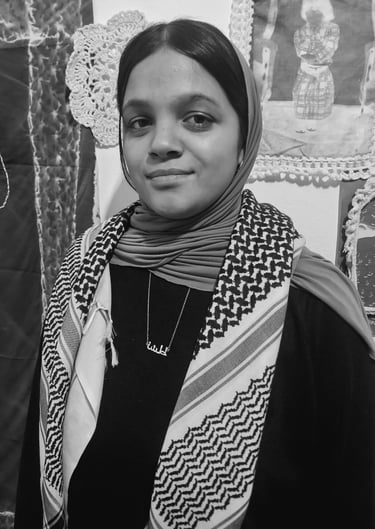
Ni-shaat Bardien (Mitchells Plain, Cape Town) is a visual artist whose work resonates deeply with the Cape Malay heritage. Through her first exhibition Spices, Threads, and Memory, she explored the intricate connections between food, family, and faith. Her art delves into her personal history and broader societal narratives, incorporating alternative photographic techniques like anthotypes and cyanotypes to foster a dialogue between the past and present. Ni-shaat's pieces, rich in traditional spices and detailed hand-craftsmanship such as crochet and embroidery, highlight the resilience of Cape Malay women. Currently studying towards her PGCE at UCT, she is passionate about education and the transmission of cultural knowledge. Her art not only preserves cultural memory but also encourages viewers to ponder identity and continuity amidst historical disruptions.
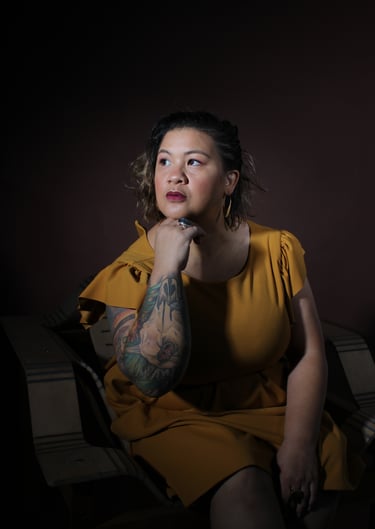
Shalner Cecilia Ching (b. 1980, Woodstock, Cape Town) is a multidisciplinary artist whose practice explores memory, identity, and the fabric of community. Of mixed-race heritage and the youngest of four siblings, Ching grew up in the dynamic streets of Woodstock during the final years of Apartheid, a time marked by cultural resistance, transformation, and political unrest. Her early influences include the rhythms of neighborhood Muslim choirs, the rise of rap music as a form of protest, and the bold lines of American graffiti—each offering a voice to the marginalized. Ching continues to create work that addresses the complexities of race, belonging, and collective memory. Her art is both personal and political, grounded in the experiences of growing up mixed-race during Apartheid and the enduring legacies of community life.
About Artist
PHOTOGRAPHER, Hafeez Floris
MIXED-MEDIA ARTIST, Shana-Lee Ziervogel
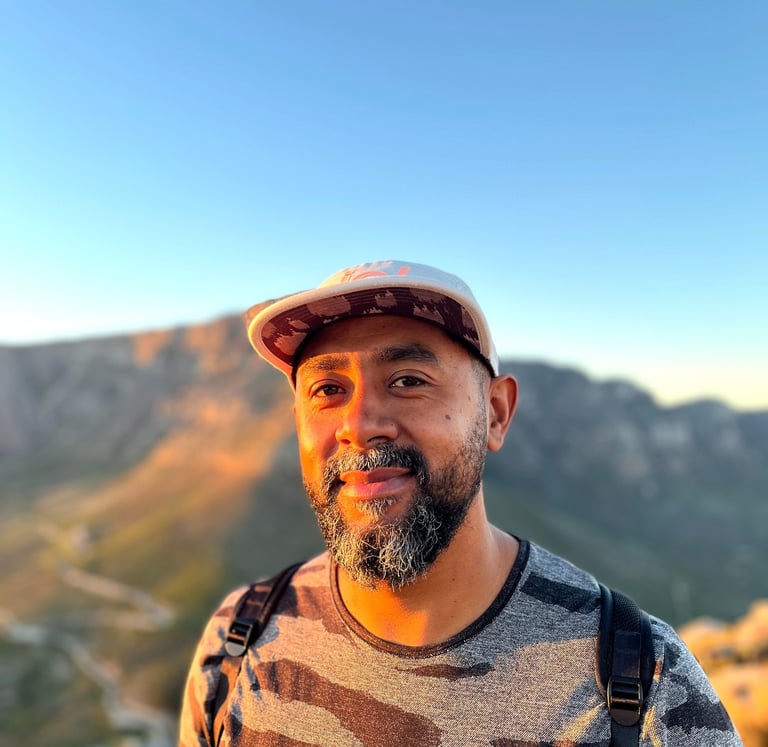
"We are forced to leave home before the sun rises. We move into the city bowl — a space shaped by historic privilege, where people run before work, walk their dogs in peaceful, manicured parks, and enjoy a windless, curated beauty that feels worlds away. But for us, that beauty is momentary -Then, after a day’s work, heading back to overcrowded homes, loud voices, cold wind, and the everyday pressure of life in the Cape Flats only to go back home in the shadows of the mountain.
There is a quiet ache in experiencing this daily contrast. To live the dream — the life our parents once spoke of, the one they were stripped of — only for a second, while walking to a job that barely pays a living wage."
-Hafeez Floris
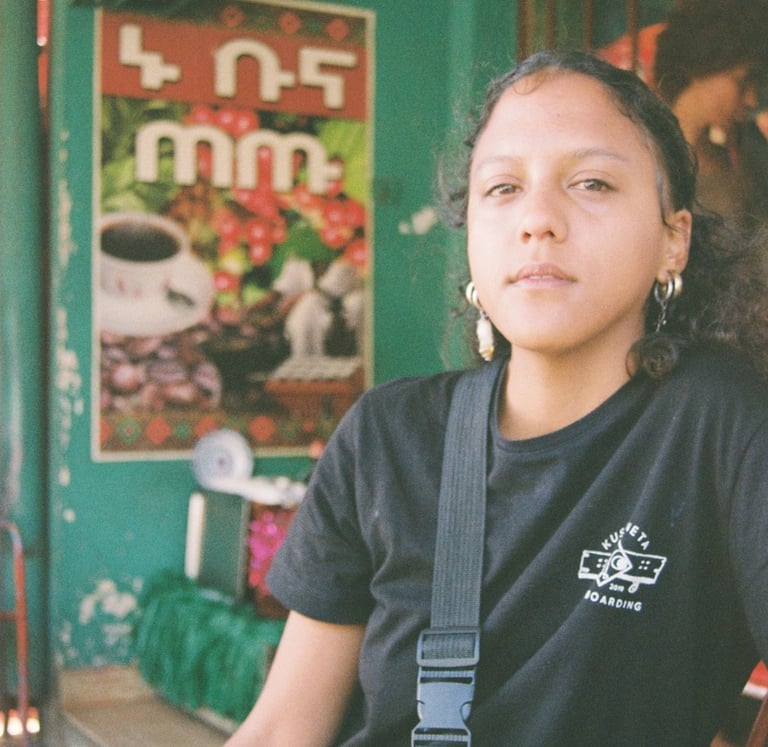
"I had collected these National Geographic magazines and decided to start from the beginning of creating any composition, just to create. The more images I cut out and essentially played with. I started to see that a lot of the photographs in the magazine itself were taken by the privileged European man coming to these indigenous lands in the global south and essentially exploiting them with their lenses.
Through the deconstruction of these images I aimed to portray the culmination of these acts."
-Shana-Lee Ziervogel
About Artist
PHOTOGRAPHER, YASSER BOOLEY
EMPOWERING MARGINALIZED ARTISTS BY PROVIDING PRACTICAL SUPPORT TO SHOWCASE THEIR ARTWORK
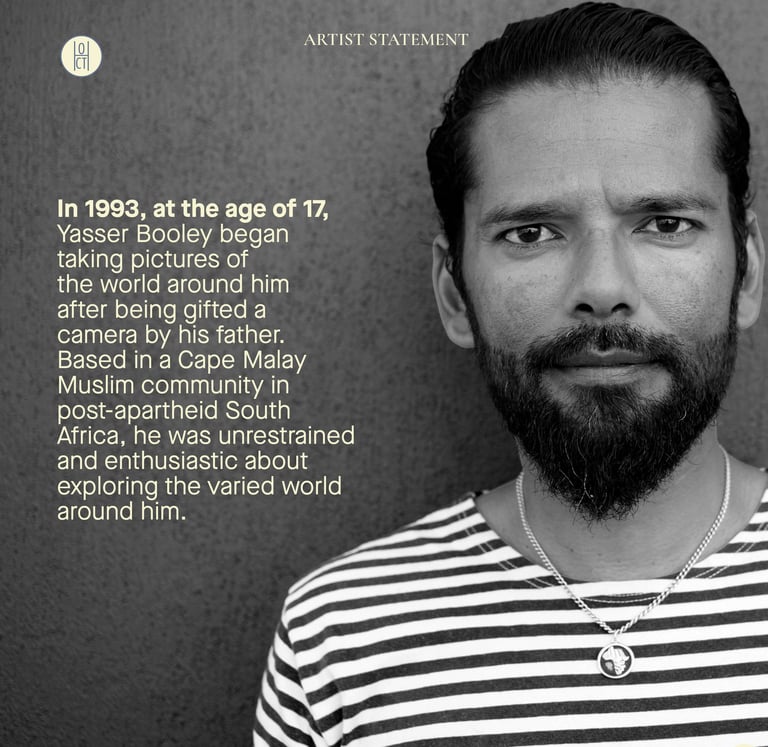
Fascinated by the ability of photography to represent his own perspective on people and events, he discovered a method to document his personal progress and maturation through capturing moments. While gaining experience as a freelancer in the production field, Yasser continued to immerse in photography. He held roles as a camera assistant, sound technician, and production assistant for multiple short films and documentaries. His debut publication was a cover article for Design Indaba in 2001, but it was not until two years later when he was employed as a stringer for the Mail & Guardian in the Western Cape that he began to identify as a 'photographer'. It was at that point that he began participating in group shows. He is known for his work in documenting and promoting Cape Town’s diverse cultural heritage, particularly in the areas of District 6 and Bo-Kaap.
Booley has been involved in various projects aimed at preserving the history and identity of these communities and advocating for social justice and inclusion. With a strong passion for storytelling, he has independently published two online photo magazines and several limited edition physical photo books. He has consistently preferred to express his perspective based on the circumstances he is in, rather than using a predetermined, goal-driven strategy. Over time, his documentary approach has evolved to focus more on formalizing his subject through environmental portraiture, with less emphasis on the notorious 45 degree photos.
As an artist, he believes that it is the essence of being human that drives his creative instincts. Booley has contributed to publications and exhibitions that explore themes of identity, memory and belonging in South Africa. His work reflects a deep engagement with the complexities of South Africa’s history and contemporary social issues. His work is often regarded as high quality and significant within the context of South African photography and cultural documentation. Reflecting a deep engagement with the complexities of South Africa’s history and contemporary social issues, Booley’s photography captures the essence of Cape Town’s diverse communities, street culture and heritage, showcasing a deep understanding and appreciation for the people and places he photographs. Booley’s work has received recognition both locally and internationally, affirming its value and impact within the realm of cultural representation and storytelling through imagery.
“Heritage and culture, in terms of what was passed down, and what I came to find as the practice of the Muslims of the Cape is very important to me. They have informed my world view, and my practice. The open door policy, and the paramount importance of hospitality due to the guest for example, speaking out against injustice, maintaining bonds of family and community, the smell of freshly baked pies on Eid morning after a month of fasting, the melodious mix of the various mosques in Bo-Kaap calling the Adhaan at the time of the prayer are all aspects that have formed the framework of my Identity and have established in me a sense of “place”, a sense of origin, a sense of birthright.”
-Yasser Booley
Artists
Support marginalized artists by purchasing Gary Frier's prints.
Part of the proceeds go towards sustaining OCTH, to continue providing practical support to marginalized artists, telling stories about culture and traditions, while educating and preserving cultural history and heritage through art.
EMPOWERING MARGINALIZED ARTISTS BY PROVIDING PRACTICAL SUPPORT TO SHOWCASE THEIR ARTWORK
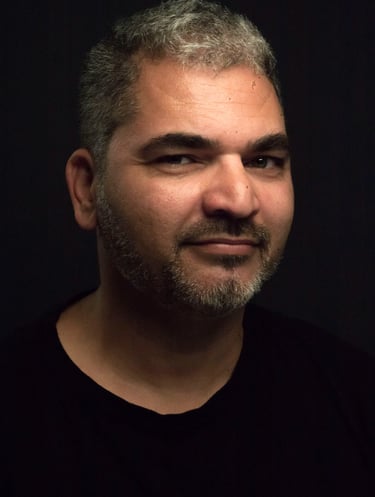
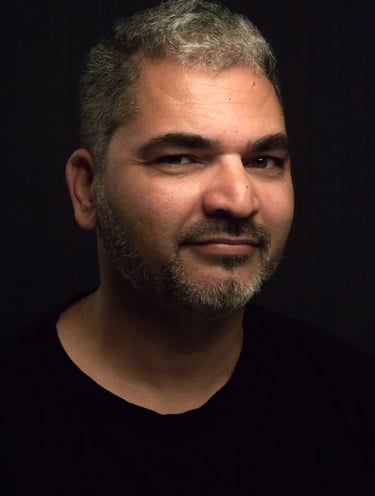
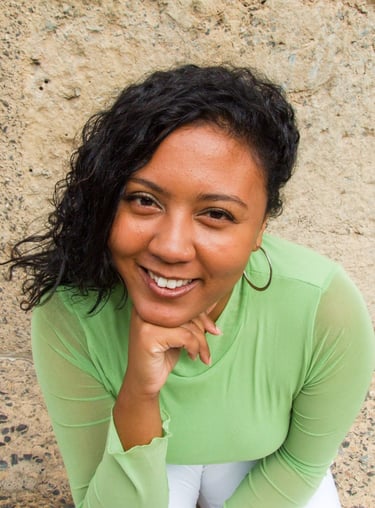
Born in Strandfontein, she finds joy and beauty in the world around her and aims to engage with the audience, encouraging them to contemplate their own life experiences. Titus aims to capture the essence of the African community as a whole through the use of vivid and striking colours in her paintings.
Embracing the rich tapestry of her cultural background, with roots in Namibia, she immerses herself in the traditions, customs, and stories passed down through generations.
In the exhibition, she delves into culture by exploring her identity, recognizing that her cultural heritage is an intrinsic part of her being.
Our Cape Town Heritage is happy to showcase the artwork of Gary Frier. Born in Kuilsriver, he is an artist and art therapy facilitator, who uses art therapy in his practice. Frier uses different found objects and discarded materials in his portraits of people he has come across in his life as a facilitator.
Frierer's themes and subjects are culturally and socio-politically inspired. In his art, he finds inspiration in many forms of media and says that his work is about emotive reflection of his place in the world.
By drawing inspiration from ancient myths and folklore, the exhibition “EKSÊ! Echoes of Self” shows Frier's artwork that sheds light on the profound impact that mythology and culture has on promoting social well-being and unity within society.
Copy QR Code to easily share


The Art
With each discovery, Kimberley Titus feels a deep sense of connection to her roots and a profound appreciation for the diverse perspectives that shape her worldview. Through this journey of self-discovery, she not only celebrates her heritage, but also gains a deeper understanding of the interconnectedness of her culture, fostering a sense of a new cultural identity. In honouring her past, she is empowered to confidently navigate the complexities of the present and envision a future where diversity is not only acknowledged, but also celebrated as a source of strength and beauty. Through her representations, we perceive a contemporary perspective on cultural experiences as a millennial, exploring the physical manifestations of culture.
While in the Northern Cape, Gary Frier felt a strong connection and curiosity towards individuals who embraced solitude in the vastness of their environment. He also incorporates elements from the First Nation Khoisan mythology into his artwork that he believes no longer remains in the new generations of indigenous nations who were disenfranchised by spatial apartheid planning. By drawing inspiration from ancient myths and folklore, Frier's artwork aims to shed light on the profound impact that culture and mythology have on promoting social well-being and unity within society. Through his creations, he weaves together narratives that transcend time and space, inviting viewers to contemplate the timeless wisdom and universal truths embedded in these stories.
Both Titus and Frier’s artistic endeavours serve as a bridge connecting the past to the present, fostering a deeper appreciation for the rich tapestry of human experiences and beliefs that shape our collective identity. In a world often marked by divisions, their work stands as a testament to the power of heritage and art that inspires empathy, understanding, and a shared sense of humanity across diverse cultures and traditions. The two artists anchor themselves in distinct temporal contexts; Kimberley asserts a specific viewpoint, while Frier’s interpretation of culture is characterized by fluidity and introspection.
Discover
Contact Us
Our cultural heritage matters
Help us learn and grow by sharing your respectful feedback on our website, exhibitions, social media and more:
Store's Terms and Conditions