PRESERVING CAPE HERITAGE AND CULTURE THROUGH EXPLORING VISUAL ARTS AND EDUCATION

A Legacy of Home, Faith and Resilience
Our intern graphic designer shares her story: From go-kart races in District Six to deep roots of faith and family, discover how a Cape Town family preserved their heritage and identity through forced removals.
THROUGH YOUR PEN
Kauthar Benjamin
7/29/202614 min read
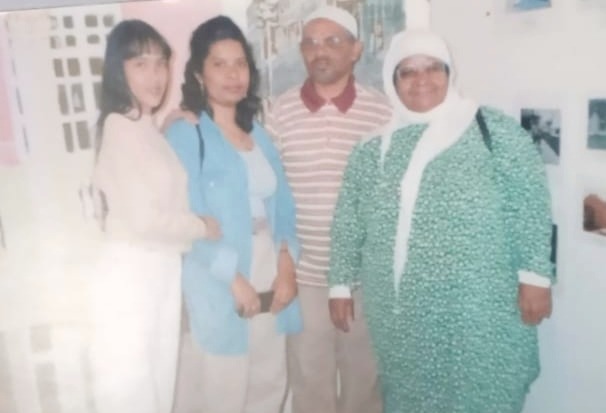
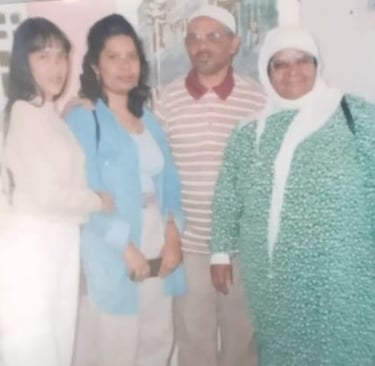
Every family has a history. Some families pass their stories down during dinner time rituals. Others have scrapbooks of pictures or old heirlooms. My family’s history has been passed down through generations through memory. My grandmother’s memory, my mother’s memory and their forefather’s memories. Memories are a way to remember the past but for us, they remind us of our people, our places and the values they have instilled in us today.
Our family's story is closely tied to Cape Town, District Six and later Mitchells Plain. It is a story of feeling at home. Being forced to leave, of believing in something and never giving up of being part of a community and making sacrifices. Apartheid decided where my family could live. It did not change who they were. They faced challenges but they always stayed true to their family, their faith and helping others. My family always puts their family, faith and community first. They showed strength and kindness in the face of hardship. Even through everything they went through, they never gave up on their family, their faith or their community.
Our family history goes back a time even before I was born. It starts with my grandparents and the people who came before them. A lot of families from the Cape have a similar story. The Cape has a mixed history and that is reflected in our family. My ancestors were from different places, such as Southeast Asia, India and Europe. Each of these places added to the culture of the Cape Malay community. The Cape Malay community is what we are part of. Our ancestors had a time because of colonialism and slavery. They still managed to keep their religion, customs and community spirit. The Cape Malay community is very important to us.
Faith became the foundation of our family. For us Islam is not something we do on Fridays or during Ramadan. It is what guides us every day. Islam teaches us how to treat each other in the family, how to be good to our neighbours and how to raise our kids. My grandfather is a respected man in our community because he knows a lot about Islam. When he was a man he went all the way to Saudi Arabia to learn more about his religion. He studied hard and learned the entire Qur'an by heart. Even though he could have been an imam he decided to do something. He thought he could help his community in different ways. Islam is what helps us make choices and be good people. My grandfather loves Islam. He wants to share that with everyone around him.
Throughout his life he remained dedicated to teaching others. He taught madrasah classes, mentored countless young people, and became known for his ability to engage thoughtfully with people from different faiths. His understanding of both the Qur'an and the Bible allowed him to participate in respectful interfaith discussions while remaining firmly grounded in his own beliefs. For him, faith was never about status or recognition. It was about living with integrity, serving others and remaining true to one's principles.
My grandmother embodied those same values through quiet strength and unwavering dedication to her family. She learned to cook through experience rather than formal training and became well known for preparing meals for weddings, family celebrations and community gatherings. Even while raising children, she continued to support her family through her cooking, demonstrating that hard work and generosity often go hand in hand.
These values were passed on to my mother from an early age. While my grandmother inspired her through determination and resilience, my grandfather became her greatest role model. She often describes herself as a "daddy's girl," admiring his work ethic, humility and compassion. Watching him leave for work regardless of the weather taught her that success comes through perseverance rather than entitlement. More importantly, she learned that one's principles should never be compromised simply because society expects otherwise.
My mother’s earliest memories are in District Six. She was born in our family home on St. Vincent street in 1973. She was born at home, unlike many children born in hospitals today. Family members often joked that she was something of an experiment because home births were going out of traditions. One story that stuck with her all her life was that my grandfather wanted to be there when she was born. But at the time cultural expectations discouraged men from attending the birth. He wasn’t allowed to see her come in but the story became one of the many cherished family memories to be passed down to the next generation.
District Six was already living under apartheid but my mother as a young child had very little understanding of politics. She does not remember laws or segregation, she remembers neighbourhood friendships, family traditions and endless childhood adventures.
She remembers District Six as a vibrant place. The kids would spend their days outside playing together and making up games out of anything they could find. They had no computers, mobile phones or social media to distract them. The streets themselves were a playground for the imagination to flourish.
My mother was what many would describe as a tomboy. She prefered to climb and run and build things with the boys instead of playing quieter games with the girls. If anyone told her that girls couldn’t do something, she would be even more determined to prove them wrong. That determination often earned her a scolding from my grandmother, but it also made the resilient woman she grew up to be.
The children built homemade go-karts from wooden crates, planks, rope and old wheels. Constitution Street, with its steep incline, became their race track as they sped downhill before steering around the corners. One race nearly ended in tragedy when my mother narrowly missed colliding with a bus before crashing into a pavement. Although she escaped with injuries rather than something far worse, the story became one of many family memories retold with equal parts relief and humour.
Friendships in the neighbourhood were beyond playdates. Families took care of each other as if they were family. One of my mother’s childhood friends lived just around the corner from each other. The two children grew up thinking they were brother and sister, because his mother and my grandmother had both nursed him as a baby. They talked to each other from bedroom windows, ate together almost every day and marked the commonplace moments of life together. If my grandmother made frikkadels, she would call him to come and eat. His mother would bake cream-filled pastries and he would invite my mother to join them.
Food became one of the strongest expressions of love within the community. My mother still recalls my grandmother's homemade vanilla cake, baked on the stove and decorated with icing sugar and cherries. It was not an expensive dessert, yet it became one of her most treasured childhood memories because it represented family, comfort and togetherness.
The entertainment was simple but memorable. One of her favorite spots was the Avalon Bioscope, where a few cents could get you into two films, a packet of snacks, a small bottle of Coca-Cola, and biscuits. Kids would spend the day watching cowboy movies before walking home, pretending to be the heroes they had just seen on screen.
Looking back, my mother often says they lived in poverty but never felt poor. Material possessions meant much less than the relationships around them. Neighbors knew each other, children played freely, and parents trusted the community to care for every child as if they belonged to everyone.
As apartheid policies intensified, the neighborhood around them slowly began to change. Houses vanished one by one as forced removals picked up speed. At first, my mother was too young to understand why friends suddenly moved away or why empty spaces appeared where homes had once been. To a child, the demolished buildings became new places to play. Only years later did she fully grasp that those empty fields represented families who had been forced to leave their homes.
One memory remained especially vivid throughout her life. From the balcony of their home, she watched the construction of the Good Hope Centre as a young child. Even decades later she could still picture the building slowly taking shape against the Cape Town skyline. Small memories like these became anchors to a place she would eventually lose.
In 1980, when my mother was seven years old, our family was forced to leave District Six as part of the apartheid government's removals. Although adults carried the burden of understanding the injustice behind the move, children experienced it differently. For them it meant leaving behind friends, familiar streets and the only home they had ever known.
The day of the move became one of my mother's clearest memories. Furniture was lowered from the upstairs balcony because it could not fit down the staircase. Family members packed the last belongings into waiting trucks while neighbours said their farewells.
Before leaving, my mother walked slowly through the now-empty house. She ran her hands across the textured plaster walls, memorised the fireplace and quietly told herself to remember every detail. Even at seven years old she understood that she was saying goodbye forever. She feared that if she did not consciously remember the house that day, she might lose it from her memory entirely.
It remains one of the most emotional memories she has ever shared with me.
Yet, as painful as leaving District Six was, children have an extraordinary ability to find hope. When my family got to their house in Mitchells Plain the kids had never seen it before. They ran around the house really excited because each of them would have their bedroom for the first time. The house was nice; it had water pipes inside water and a bathroom, which was something they had never had before.
My mother still talks about how funny it was when she kept turning on the hot water tap because she could not believe that warm water was coming out of the wall.
The new house was more comfortable. It was not the same as what they had before. District Six was not a place where people lived, it was a community where people knew each other, shared things and took care of each other. Even though the government moved people away from District Six they could not make them forget what they had.
These memories of District Six helped my family start their life in Mitchells Plain. In Mitchells Plain they would meet people and make new friends and my grandparents would help people around them just like they did in District Six.
The move to Mitchells Plain marked the beginning of a new chapter for my family. Although they had left behind the place they called home, they carried with them the values and sense of community that had defined life in District Six. Like many families who were forcibly removed, they had to rebuild not only their lives but also the social and religious networks that had once been woven into their everyday existence.
One of the greatest challenges after relocating was the lack of religious infrastructure. There were no mosques in the newly developed area, leaving Muslim families without a place to gather for daily prayers or the special Taraweeh prayers during Ramadan. Rather than accepting this, members of the community took it upon themselves to create a place of worship. With the support of local residents, a large army tent was erected to serve as a temporary mosque. Later, prayers were held in local schools before plans were made to construct a permanent mosque.
My grandfather and his brothers played an important role in these early efforts. They helped establish the Mitchells Plain Muslim Society and worked alongside other community members to raise funds, organise resources and support the construction of what would become one of the area's first mosques. My grandfather also contributed by teaching madrasah classes, mentoring young Muslims and sharing his extensive knowledge of Islam. His influence reached far beyond his own family, touching the lives of countless people throughout Cape Town.
While the family was rebuilding their community, apartheid continued to shape every aspect of daily life. Segregation determined where people could live, which schools they could attend, which beaches they could visit and even where they could sit on buses and trains. Universities remained divided along racial lines, with institutions such as the University of the Western Cape serving non-white students while many opportunities remained reserved for white South Africans.
As a child, my mother accepted these restrictions as normal because they were all she had ever known. Only later did she realise how deeply apartheid had controlled everyday life. Looking back, she remembers passing beautiful beaches and public spaces that her family was not allowed to enjoy, simply because of the colour of their skin. These experiences quietly shaped her understanding of inequality long before she could fully explain it.
By the mid-1980s, my mother was no longer a young child. As she entered her teenage years, South Africa was engulfed by widespread political unrest. Schools became centres of protest, and young people found themselves at the heart of the struggle against apartheid. Demonstrations, marches and boycotts became part of everyday life.
She vividly remembers the sound of tear gas canisters being fired into her school. Without warning, lessons would be interrupted as police entered the area searching for student activists or attempting to suppress demonstrations. Learners fled classrooms, climbed fences and ran along railway tracks in an attempt to escape the clouds of tear gas and the threat of arrest. These moments were terrifying, yet they became a familiar part of growing up during the State of Emergency.
Police raids were equally frightening. Entire neighbourhoods would be surrounded while security forces searched homes for suspected activists. Young people could be detained without trial, and many families lived with the fear that a loved one might leave home and never return. Although my own family was not directly targeted, they witnessed the uncertainty and violence affecting countless others around them.
The years leading up to democracy were filled with both hope and anxiety. My mother remembers the excitement surrounding the release of Nelson Mandela and the negotiations that would eventually end apartheid. At the same time, she recalls that freedom did not instantly erase the divisions that had existed for generations. Many families were still grieving those who had disappeared or been killed during the struggle, while others questioned whether true justice had ever been achieved.
When South Africa finally held its first democratic election in 1994, it represented far more than the right to vote. For families like mine, it symbolised the possibility of building a future free from the legal restrictions that had shaped previous generations. New opportunities slowly emerged in education, employment and housing, allowing many people to pursue careers that had once been beyond their reach.
My mother's own journey reflected these changing opportunities. Beginning her career in retail and security, she worked tirelessly to improve her circumstances before eventually building a successful career in the insurance industry. Along the way, she experienced both the opportunities created by democracy and the challenges that remained. As one of the first women of colour to hold a senior management position within her organisation, she often felt she had to work twice as hard to prove that she had earned her success through ability rather than affirmative action. Rather than discouraging her, these experiences strengthened her determination to lead with integrity, professionalism and humility.
Throughout every stage of my family's history, the values passed down by my grandparents remained constant. They believed in serving others, working honestly, standing firm in their faith and treating every person with dignity regardless of their background. These principles shaped my mother's life and continue to influence my own.
Today, when I think about my family's story, I do not only think about apartheid or forced removals. I think about neighbours who shared meals, children racing homemade go-karts down cobbled streets, evenings spent together during Ramadan, and a community that refused to let hardship define its future. I think about grandparents who quietly dedicated their lives to serving others, parents who worked tirelessly to create better opportunities for their children, and the resilience that has been carried from one generation to the next.
Recording these memories has allowed me to understand that history is not only found in textbooks or museums. It lives within families, in the stories we choose to preserve and pass on. By documenting these experiences, I hope to honour those who came before me and ensure that future generations remember not only the hardships my family endured, but also the compassion, faith and strength that enabled them to overcome them.
Although apartheid officially ended in 1994, its impact did not disappear overnight. My mother often explains that freedom was not simply about gaining the right to vote; it was about learning how to live in a country that was trying to redefine itself. Many opportunities became available that had previously been denied to non-white South Africans. People could choose where they lived, study at universities that had once been inaccessible, and pursue careers that had previously been reserved for white South Africans. However, the emotional and social divisions created by apartheid remained.
As my mother built her career, she experienced both the benefits and the challenges of this new South Africa. Starting in retail before moving into the insurance industry, she worked her way into senior management through determination and perseverance. Despite her achievements, she often encountered the assumption that her promotions were only the result of affirmative action rather than her own abilities. Instead of allowing these perceptions to discourage her, she used them as motivation to work even harder, proving through her knowledge, leadership and dedication that she had earned every opportunity through merit.
The values that guided my mother throughout her life were deeply rooted in the example set by my grandparents. My grandmother demonstrated resilience through her devotion to her family and community. She raised her children while supporting the household through cooking, preparing meals for weddings, family celebrations and community events. Her generosity showed that caring for others was one of the greatest forms of service.
For my mother, however, her greatest inspiration was always my grandfather. She admired his unwavering work ethic, his humility and his commitment to his faith. He believed that success required discipline, honesty and perseverance, and he taught these lessons not only through words but through the way he lived his life. Regardless of the challenges he faced, he remained committed to providing for his family and serving his community without expecting recognition in return.
His contribution extended far beyond his own household. Through his religious education, he became a respected teacher who dedicated much of his life to sharing Islamic knowledge with others. He taught generations of students through madrasah classes, participated in interfaith discussions and encouraged people to deepen their understanding of religion through knowledge and compassion rather than division. Many families throughout Cape Town remember him not simply as a teacher, but as someone who quietly shaped their lives through his guidance and example.
My family's history is also connected to Cape Town's rich cultural heritage. One of my grandfather's relatives was the acclaimed playwright and composer Taliep Petersen, whose productions celebrated the stories, music and identity of Cape Town's communities. His work brought the history and culture of District Six to audiences around the world, preserving memories of a community that apartheid had attempted to erase. Although his life ended tragically, his artistic legacy continues to remind people of the importance of protecting Cape Town's cultural heritage.
Listening to my mother and grandmother recount these memories has made me realise that history is not only recorded through official documents or museum collections. It survives through conversations, family stories and the experiences that are passed from one generation to the next. Many of the people who lived through apartheid are growing older, and with them are memories that may otherwise be lost. Recording these stories has therefore become more than a family project; it is a way of preserving a piece of South African history through the voices of those who experienced it.
Throughout every generation of my family, one theme remains constant: resilience. Whether it was rebuilding a community after forced removals, establishing places of worship in a new township, working tirelessly to create opportunities for future generations, or preserving cultural and religious traditions despite immense hardship, my family consistently chose hope over despair. They refused to allow difficult circumstances to define their future.
Their story has shaped the way I see my own identity. It has taught me the importance of faith, family, education and community. It has also given me a deeper appreciation for the sacrifices made by previous generations so that I could grow up with opportunities they never had. While I did not experience apartheid myself, I carry its history through the memories entrusted to me by my family.
By documenting these stories, I hope to ensure that future generations understand not only the injustice of apartheid but also the remarkable strength of the communities that endured it. District Six was never simply a place on a map; it was a vibrant community built on friendship, generosity and belonging. Although its people were scattered across Cape Town, the spirit of District Six continues to live on in the memories, traditions and values carried by families like my own.
This family history is my way of honouring those who came before me. It is a tribute to my grandparents, whose faith and service strengthened their community; to my mother, whose resilience transformed adversity into opportunity; and to every person whose story deserves to be remembered. Their experiences remind me that while homes can be demolished and communities displaced, identity, faith and memory remain powerful forces that no government can ever erase.
Discover
Contact Us
Our cultural heritage matters
Help us learn and grow by sharing your respectful feedback on our website, exhibitions, social media and more:
Store's Terms and Conditions