PRESERVING CAPE HERITAGE AND CULTURE THROUGH EXPLORING VISUAL ARTS AND EDUCATION

SAILORS AND SLAVE IN THE EARLY CAPE
By Yunus Ogier, OCTH Researcher
DIGITAL ARCHIVE RESEARCH LIBRARY (DARL)
The Cape during the 18th century was a confluence of people, culture and sounds as its position as a halfway station between Europe and the east facilitated a constant movement of people and trade. It was also the final stop for some slaves and political exiles coming from the east. In addition to them, there were also the transient passengers aboard these ships which were common for port towns. The most common being the wayfaring sailors.
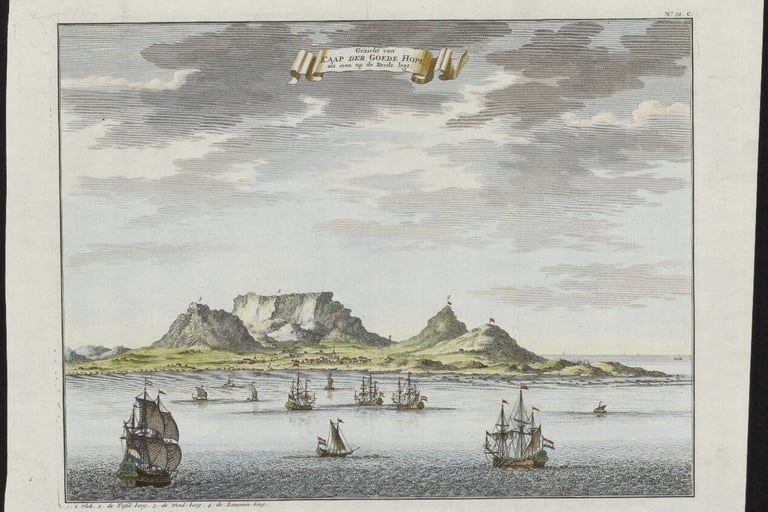
Figure 1. Image of Table Mountain by François Valentijn, 1726. Courtesy of the National Archives Netherlands
Sailors, Soldiers & Honour
The passengers who disembarked from these vessels were a mixture of artisans, passengers and naval officers. Sailors and soldiers were included in this mix and although of a similar pay grade, they were not regarded as equals in a social setting. The ratio of sailor to soldier was roughly 2:1 on outward vessels (sailing towards Asia) and 5:1 on returning vessels, which highlighted the high mortality of soldiers in Asia (Worden 2007:74). Despite both groups receiving similar wages, the differing social status aboard VOC vessels shows how one's status on board was not only shaped by income and by perceptions of honour and discipline.
According to accounts sailors were seen as being the lowest rung of VOC employment, so much so, that if an artisan (cobbler, carpenter, blacksmith) would be demoted to rank of sailor, the effect would be so great as to cause a walkout. The term itself was a catapult for humiliation, and if soldiers or artisans were demoted to that of a sailor, it would discredit their name entirely (Worden 2007:75).
Sailor Lodging & Tavern Life
In stark contrast to the present day, many of Cape Town’s more affordable rented rooms and taverns were closer to the shoreline, which in 1752 was characterized as a “dismal spot”. The town being a place migrancy, the shoreline became the intersection between traders, the movement of goods and the people mixing together. Cape Town at the time was still very small and not clearly demarcated into districts, which meant that the movement and mixing of crowds often overlapped (Worden 1998: 83).
The shoreline was also a social space for those of the lower ranks of society and where ethnic and class mixing was less rigid than in the wealthier homes of the burghers. Upon disembarkation, there were limited options on where sailors could go as these men were accustomed to life on the sea, which is where their strengths lied. They also had a certain maritime lingo which was only practiced among sailors, which held associations to ship life. The werf (wharf) was one place where they could mingle with other sailors who were doing work on the docks. Ultimately a sailor would seek out a place to drink or where there were women, or both (Worden 1998:83,Worden 2007:76).
The shoreline was evolving into more than just a geographical space as it was now functioning as a port of arrival with the added dynamism of being a social center shaped by class and labour. It also underscores how, from a purely cultural perspective, Cape Town merged into a hub for a transient maritime society. For sailors in particular, the docks and taverns offered a certain familiarity in an otherwise uncertain environment.
The taphuis became the spot where soldiers, slaves, free blacks and sailors came to be merry and it was apparent that the legal distinctions between slaves and the free blacks was suppressed. Here the VOC garrison would also gamble with slaves, and partake in tobacco smoking and dancing. It became a place where everyone disposed of their titles and social responsibilities - a bubble within the colony that saw everyone as an equal.
The taverns also became spaces where conflicts would be disputed to those who frequented. These usually formed around the many brawls that had taken place, possibly with the intake of much drink. Sailors, it seemed, were the provocateurs of these brawls. With the money they made, it was spent on women, drink and illicit trade goods. One case worth noting occurred in 1731 when a pub brawl broke out when sailors heckled soldiers by calling them “Caabse gauwdieven” and “schelmen” - pickpockets and rascals respectively. It's understood that these remarks were hurled in reference to the high cost of alcohol and other provisions, for which Cape Town was known to be very expensive (Worden 1998:84,85).
These transient sailors became prime targets for attacks by soldiers who were stationed in the garrison. These fights were petty, often over women, accusations of theft or from the occurrence of heavy drinking. It appears that these men, battle scarred and salt baked from the voyages, didn't have much to look forward to besides entertaining themselves with the underclass of the Cape.
The taverns also became spaces where masculinity can be expressed in the form of knife fighting, which informed a practice of male popular culture and the right to defend one's honour. Knife fighting was popular in Amsterdam for working class men to settle their disputes, and was most likely carried on to the Cape by travelling soldiers and sailors. However, when one adds liquid bravado in the form of drink and the free mixing of varying social classes and rank, the chances of one man' s ingrained ideology rising to the surface rapidly increases. Take for example the soldier Pieter van Hegeraad, who challenged his fellow soldier to a knife fight, because he felt that his colleague was being dishonorable by drinking with a sailor (Worden 2007:80).
Tavern culture amongst sailors and soldiers was becoming a site of masculine performance and identity formation in the colonial setting. We could say that knife fighting was a reflection of masculine reputation, especially amongst working class men. The social status of these men, it seemed, depended heavily on physicality as opposed to wealth and authority.
De bemanning van het schip bestond bij vertrek uijt
Gesel in 85. koppen en een Loots die van Bengale voor
twee Caaren gereputrieerd is en tans weder als passa¬
gien met de rang van opperstuurman diawaarts
keert van deeze Equipagie zijn tot aan de kaap
de Goede Hoop twee Mattroossen verongelukt en 4. als
impotenten in het Hospitaal aldaar gebragt
The crew of the ship at departure consisted of 85 men and a pilot who is reputed from Bengal as two Carriages and is now returning downwards as passengers with the rank of chief mate. Of this crew, two sailors perished up to the Cape of Good Hope and 4 were brought to the hospital there as impotents (The Genealogical Society of South Africa,VOC letters and papers digital search, Globalise transcriptions viewer, inventory nr. 3836).
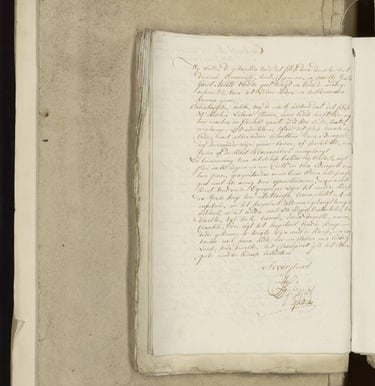
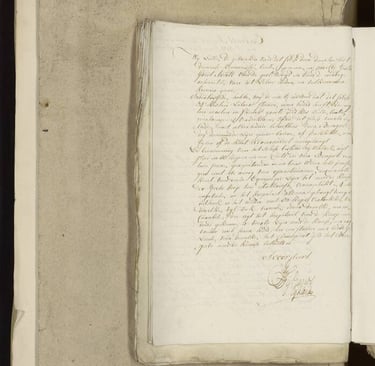
Figure 2. Image courtesy of the National Archives Netherlands
Life ashore would have been a strange experience for sailors, given that they were only transiting. However, life aboard the ships proved even more dangerous. The following excerpt showcases how taxing these voyages can be:
Lijfheers plaats vertoefs hebbende, voorzegde slavenjongen Heelon voor dezen van het slavenhuis was gekomen en het daarin zijnde volk geroepen, mitsgaders gezegd had: “Kom, wilt gij een toopje drinken!” Zulks den comparant, benevens de bij hem in het slavenhuis zijnde twee jongens in name Januarij en Jephta, hun van uit het slavenhuis met en benevens gemelde Hector naar den wagen van desselfs lijfheer begeven hadden, alwaar een ieder uit eene kan een soopje gedronken had. Waarna den comparant, zonder meerdere van hun volk nog iemand anders bij den wagen gezien te hebben, zich daarvan daan en naar het slavenhuis terug begeven en om te slapen nedergelegd had, invoegen den comparant van hetgeen dien avond verder voorgevallen is niets het allerminste weet; en was voorzegde Januarij, die met den comparant tegelijk naar het slavenhuis terugkeerde, insgelijks gaan liggen slapen.
Dat wanneer den comparant des volgenden morgens wakker geworden was, hij gehoord had dat den slaaf Africa door den Bastaard Gersson des vorigen avonds was doodgeslagen geworden; en had den comparant gemelden Africa ook voorts voor het slavenhuis dood zien liggen, doch dat den comparant verder niets van de zaak wist.
The Lord's dwelling place, the aforementioned slave boy Heelon, had come from the slave house before this, and had called the people inside, having said: "Come, do you want to have a drink!" such
the Company, together with the two boys named Januarij and Jephta who were with him in the slave house, had each drunk a drink from a jug from the slave house with the said Hector; after which the Company, without having seen any other of their people,
had returned to the slave house and laid down to sleep, in which The Company knows nothing the slightest of what further occurred that evening, and the aforementioned Januarij, who returned to the slave house at the same time as the Company, likewise went to sleep.
That when the Company had woken up the following morning, he had heard that the slave Africa had been beaten to death by Bastard Gersson the previous evening, and the Company had also seen the said Africa lying dead in front of the slave house, but that the Company (The Genealogical Society of South Africa,VOC letters and papers digital search, Globalise transcriptions viewer, inventory nr.10973).
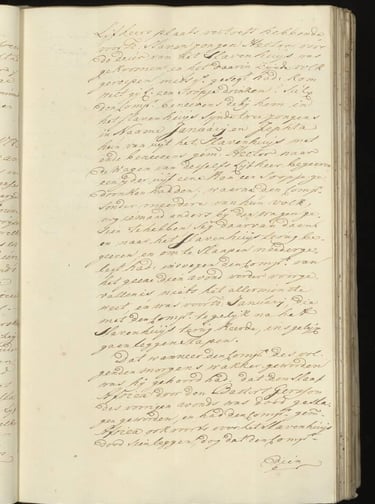
Figure 3. Image courtesy of the National Archives Netherlands
It appears that violence and crime formed a shadow over the slaves and there are many accounts of slaves being stabbed or beaten. Drunkenness could have played a major part in this, however, the close proximity of individuals in a tight space such as the slave lodge undoubtedly added to these surges of carnage. The following is a passage taken from a witness testimony in 1773:
The possible alibi statement by a slave boy Heelon is describing how he invited others to come and drink, and return later to go and sleep, having seen nothing unusual. The following morning though, they discovered the body of Africa, a slave man, laying outside the slave lodge. He had been beaten to death by Bastard Gersson in front of the slave lodge. The alibi statement by Heelon suggests that he is trying to distance himself away from the crime, or trying to suggest that the drinking group played no part in Africa’s death.
In Conclusion
The colonial structure of the early Cape was only one facade of an ever evolving city, a city which was being shaped by migration funneled through the slave trade. The volatile port city played host to differing social classes and VOC employees in transit. The merging of the indigenous, the sailor and the slave, coupled with the underclass of an early Cape Town illustrated how seemingly ordinary spaces such as the docks and taverns can lay bare ideas about honour and identity. The Cape, under the VOC showcased how expendable sailors and slaves were, treated as mere expendables against an authoritarian regime.
Discover
Contact Us
Our cultural heritage matters
Help us learn and grow by sharing your respectful feedback on our website, exhibitions, social media and more:
Store's Terms and Conditions